

Customer testimonials
Consulting & training: CTCPA supports Good & Proud in validating and optimizing an innovative process for local fruit processing using containerized microfactories
29
Sep
Published on: 29/09/2025
The CTCPA assisted Good & Proud with an on-site audit of their project and a technical training course on fruit processing in Avignon. A look back with Eric ZONTSOP, Founder of Good & Proud.
"All in all, everything went very well, with a very positive assessment of both projects."
Introduce us to Good and Proud: structure, vision, values, products...
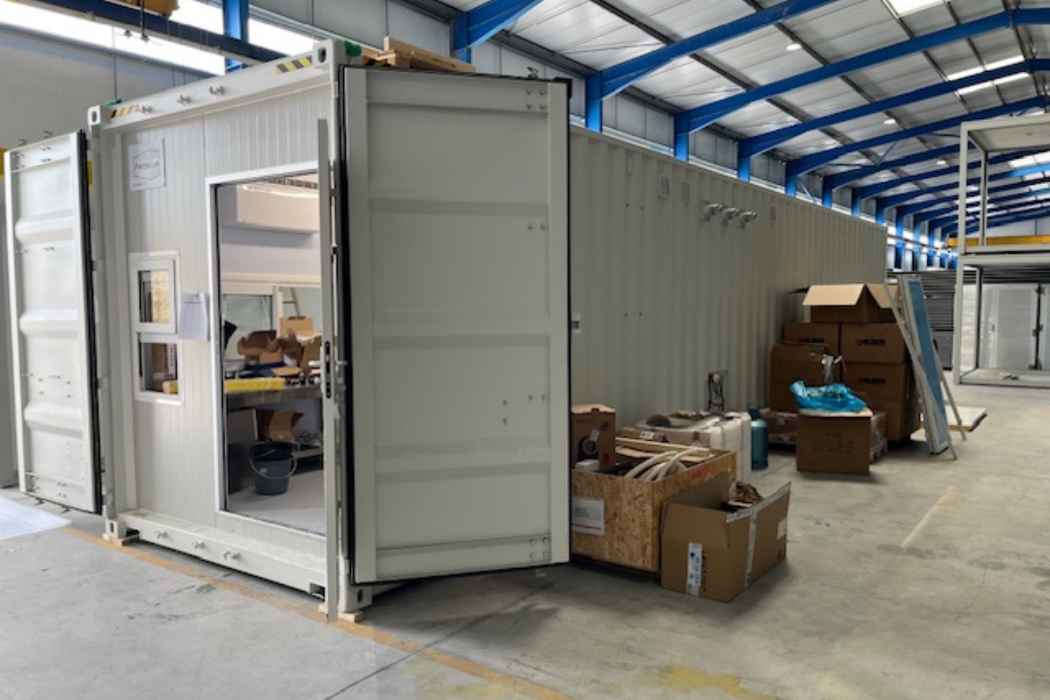
Good & Proud is a company whose vision is to create a decentralized agri-food processing network through micro-factories designed in shipping containers and located as close as possible to agricultural production basins. The aim is to offer a decentralized agro-industry, particularly on the African continent but also elsewhere in the world.
Rather than following the traditional model where fruit is transported to factories via cooperatives, Good & Proud aims to reverse this pattern: the factory goes to the fruit. This model addresses a number of issues common in Africa, such as the state of infrastructure, limited access to electricity and water, and the absence of suitable roads. These constraints make it difficult to set up sustainable post-harvest value chains.
This situation explains why around forty percent of fruit and vegetables harvested in Africa are lost. By bringing processing units closer to the fields, as soon as harvesting is completed, growers can process their produce rapidly, without additional costs or heavy infrastructure.
To realize this vision, Good & Proud not only designs and markets these containerized micro-factories, but also the products derived from their processing. The first product to be marketed will be compotes packaged in gourds or jars, made from banana, mango and pineapple purées.
In terms of values, Good & Proud is strongly committed to local processing, short production chains and fairness: the company seeks to give greater value to the work of small-scale producers, by improving income distribution to contribute to their better living conditions. Indeed, the issue of fair remuneration for producers is a major challenge, particularly in African countries.
In short, Good & Proud is based on an innovative vision of decentralized agro-industry, focused on local value creation, equity and sustainability.
How did you come to contact the CTCPA? What were your needs? What were your objectives?
I've called on the CTCPA twice.
The first time was to validate the process we had set up in our workshop. We co-designed the first workshop with a French partner, FermaLab, based in Mauvezin near Toulouse, to miniaturize a classic industrial process, normally used in very large plants, so that it would fit into a 20 or 40 foot container. The challenge was to guarantee the continuity and stability of the process within these space constraints, particularly for the production of fruit purées.
We therefore asked the CTCPA to audit our project: we sent them the specifications, the established process, and the list of identified machine suppliers. Their feedback enabled us to identify improvements to be made, in particular the additional equipment needed to maintain expected yields.
The second context was a training course I attended myself. Coming from a financial background, with no industrial training, I wanted to come face-to-face with the equipment and gain a practical understanding of the particularities of fruit processing, particularly pasteurization.
I took a two-day training course at the CTCPA in Avignon, led by Fabien AUPY, to update my practical skills and deepen my knowledge.
Why did you choose the CTCPA? How did you hear about the CTCPA?
I think it's primarily an awareness effect. The CTCPA website provided a clear, detailed explanation of the services on offer, which helped us to make the right decisions.
Then, in my discussions with industrialists, the name CTCPA came up very often. This reassured me, because if many professionals mentioned it, it was because it was a solid, recognized center in the field.
So, to sum up, it was a combination of notoriety and word-of-mouth that led me to choose the CTCPA.
How did the support go?
All in all, everything went very well, with a very positive assessment of both projects.
For the first project, the aim was to review the process proposal, identify critical points and propose areas for improvement. This was well achieved. In particular, I worked with François-Xavier CHABANEL, who has since joined a manufacturer. We had several telephone conversations and exchanged documents, as well as a final deliverable. He also took part in exchanges with me, which was very useful, especially for challenging suppliers on certain technical aspects of the equipment, areas where I lacked knowledge. His support was much appreciated. I think that without him, I would have found it difficult to move forward. So this first project was very positive.
The second project involved a two-day face-to-face training course at the Avignon site, led by Fabien AUPY. I was a rather atypical customer, as I'm looking to miniaturize an industry which is normally very large, with yields in the tens of tons per hour, whereas my project revolves around 5 to 10 tons per day. So I was taking the course with professionals from traditional industries, which was interesting. The course lived up to my expectations. The hands-on experience with the equipment and the summary document handed out at the end of the course still serve as a reference for me today, particularly when it comes to taking delivery of my first plant. It's become something of a "bible" for me.
What is your assessment today? How do you see the benefits of this support?
As I mentioned earlier, thanks to François-Xavier CHABANEL's intervention, we have modified certain aspects of the process. In particular, we have integrated additional equipment to follow his recommendations.
As far as training is concerned, I found it extremely useful. Indeed, the heart of the reactor I use is a pasteurizer, and thanks to the lessons I received from Fabien AUPY, I now feel better prepared not only to take delivery of this equipment, but also to manage its installation on site. I now know exactly what process to follow to comply with the standards.
The documentation provided is also very useful and remains a reference for me.
What are your next goals or announcements?
In terms of announcements, I'd say that, thanks to the advice and training I've received, a tool will be installed in the next few months - fingers crossed - in Douala, Cameroon. So there will be some CTCPA integrated into this tool.
In addition, as mentioned with Fabien AUPY, we plan to call on the CTCPA for product-related missions in the future. Although our industrial facilities are decentralized, we are keen to guarantee quality standards equivalent to, or even higher than, those of the conventional agro-industry, thanks to the excellence of the raw materials we process.
We could call on the CTCPA for analyses, product ageing tests, or to optimize our processes.
Once this first product has been validated, the company aims to develop other agri-food references. The equipment we have designed offers sufficient flexibility to enable us to rapidly move upmarket into other segments. Ultimately, we also want to explore other value chains in the laboratory, to identify new opportunities for decentralized processing.
__
CONTACT GOOD AND PROUD :
"All in all, everything went very well, with a very positive assessment of both projects."
Introduce us to Good and Proud: structure, vision, values, products...
Good & Proud is a company whose vision is to create a decentralized agri-food processing network through micro-factories designed in shipping containers and located as close as possible to agricultural production basins. The aim is to offer a decentralized agro-industry, particularly on the African continent but also elsewhere in the world.
Rather than following the traditional model where fruit is transported to factories via cooperatives, Good & Proud aims to reverse this pattern: the factory goes to the fruit. This model addresses a number of issues common in Africa, such as the state of infrastructure, limited access to electricity and water, and the absence of suitable roads. These constraints make it difficult to set up sustainable post-harvest value chains.
This situation explains why around forty percent of fruit and vegetables harvested in Africa are lost. By bringing processing units closer to the fields, as soon as harvesting is completed, growers can process their produce rapidly, without additional costs or heavy infrastructure.
To realize this vision, Good & Proud not only designs and markets these containerized micro-factories, but also the products derived from their processing. The first product to be marketed will be compotes packaged in gourds or jars, made from banana, mango and pineapple purées.
In terms of values, Good & Proud is strongly committed to local processing, short production chains and fairness: the company seeks to give greater value to the work of small-scale producers, by improving income distribution to contribute to their better living conditions. Indeed, the issue of fair remuneration for producers is a major challenge, particularly in African countries.
In short, Good & Proud is based on an innovative vision of decentralized agro-industry, focused on local value creation, equity and sustainability.
How did you come to contact the CTCPA? What were your needs? What were your objectives?
I've called on the CTCPA twice.
The first time was to validate the process we had set up in our workshop. We co-designed the first workshop with a French partner, FermaLab, based in Mauvezin near Toulouse, to miniaturize a classic industrial process, normally used in very large plants, so that it would fit into a 20 or 40 foot container. The challenge was to guarantee the continuity and stability of the process within these space constraints, particularly for the production of fruit purées.
We therefore asked the CTCPA to audit our project: we sent them the specifications, the established process, and the list of identified machine suppliers. Their feedback enabled us to identify improvements to be made, in particular the additional equipment needed to maintain expected yields.
The second context was a training course I attended myself. Coming from a financial background, with no industrial training, I wanted to come face-to-face with the equipment and gain a practical understanding of the particularities of fruit processing, particularly pasteurization.
I took a two-day training course at the CTCPA in Avignon, led by Fabien AUPY, to update my practical skills and deepen my knowledge.
Why did you choose the CTCPA? How did you hear about the CTCPA?
I think it's primarily an awareness effect. The CTCPA website provided a clear, detailed explanation of the services on offer, which helped us to make the right decisions.
Then, in my discussions with industrialists, the name CTCPA came up very often. This reassured me, because if many professionals mentioned it, it was because it was a solid, recognized center in the field.
So, to sum up, it was a combination of notoriety and word-of-mouth that led me to choose the CTCPA.
How did the support go?
All in all, everything went very well, with a very positive assessment of both projects.
For the first project, the aim was to review the process proposal, identify critical points and propose areas for improvement. This was well achieved. In particular, I worked with François-Xavier CHABANEL, who has since joined a manufacturer. We had several telephone conversations and exchanged documents, as well as a final deliverable. He also took part in exchanges with me, which was very useful, especially for challenging suppliers on certain technical aspects of the equipment, areas where I lacked knowledge. His support was much appreciated. I think that without him, I would have found it difficult to move forward. So this first project was very positive.
The second project involved a two-day face-to-face training course at the Avignon site, led by Fabien AUPY. I was a rather atypical customer, as I'm looking to miniaturize an industry which is normally very large, with yields in the tens of tons per hour, whereas my project revolves around 5 to 10 tons per day. So I was taking the course with professionals from traditional industries, which was interesting. The course lived up to my expectations. The hands-on experience with the equipment and the summary document handed out at the end of the course still serve as a reference for me today, particularly when it comes to taking delivery of my first plant. It's become something of a "bible" for me.
What is your assessment today? How do you see the benefits of this support?
As I mentioned earlier, thanks to François-Xavier CHABANEL's intervention, we have modified certain aspects of the process. In particular, we have integrated additional equipment to follow his recommendations.
As far as training is concerned, I found it extremely useful. Indeed, the heart of the reactor I use is a pasteurizer, and thanks to the lessons I received from Fabien AUPY, I now feel better prepared not only to take delivery of this equipment, but also to manage its installation on site. I now know exactly what process to follow to comply with the standards.
The documentation provided is also very useful and remains a reference for me.
What are your next goals or announcements?
In terms of announcements, I'd say that, thanks to the advice and training I've received, a tool will be installed in the next few months - fingers crossed - in Douala, Cameroon. So there will be some CTCPA integrated into this tool.
In addition, as mentioned with Fabien AUPY, we plan to call on the CTCPA for product-related missions in the future. Although our industrial facilities are decentralized, we are keen to guarantee quality standards equivalent to, or even higher than, those of the conventional agro-industry, thanks to the excellence of the raw materials we process.
We could call on the CTCPA for analyses, product ageing tests, or to optimize our processes.
Once this first product has been validated, the company aims to develop other agri-food references. The equipment we have designed offers sufficient flexibility to enable us to rapidly move upmarket into other segments. Ultimately, we also want to explore other value chains in the laboratory, to identify new opportunities for decentralized processing.
__