

Customer testimonials
Training & Support: The CTCPA is assisting Les Marmites de Cobannos in ensuring the safety of their artisanal spread, the Noisettou
24
August
Published on: August 24, 2026
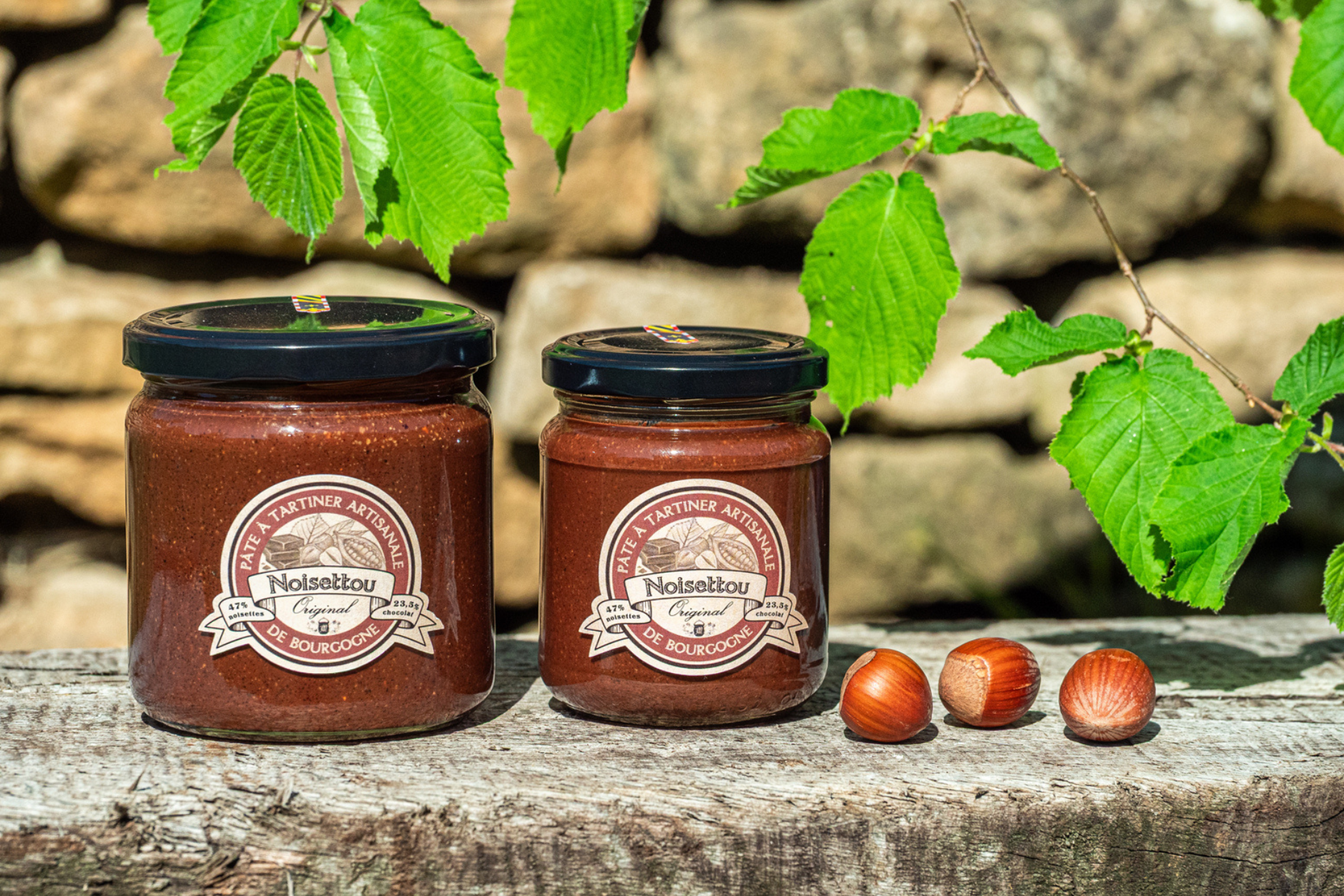
The CTCPA is helping LES MARMITES DE COBANNOS ensure the safety of their artisanal spread, Noisettou. We spoke with Claire LÉCUYER, the founder.
“All in all, it’s been a very positive experience. This support has given me both a solid foundation and a clear structure for my project.”
Tell us about LES MARMITES DE COBANNOS: its structure, vision, values, products…
Les Marmites de Cobannos is a brand I created with my husband, who is working with me on this project. The brand was launched around one main product: Noisettou, an artisanal spread. However, the idea is to expand the product line in the future to include other items—even ones that are very different.
The name “Les Marmites” was chosen for its open-ended and evolving nature, so as not to confine the brand to a single category. “Cobannos” refers to a Gallo-Roman deity associated with an archaeological site located between the Yonne and Nièvre departments, not far from where we live. A situle (small pot) found at this site inspired our logo and serves as a link between local history and our brand identity.
Our values are based on a simple approach: to offer a product that is more natural, healthier, and more transparent than mass-produced spreads. Our goal is to prioritize high-quality ingredients, short supply chains, and greater control over the product’s composition.
The project began on a very small scale, starting with a homemade recipe we made for our own use, which we gradually improved. The real turning point came when we met local producers of hazelnuts and hazelnut oil, which allowed us to significantly improve the quality of the product.
Today, we also use organic, ethically sourced chocolate and French organic sugar (in smaller quantities than most products on the market). We’d also like to eventually offer a “sugar-free” recipe, but local alternatives remain limited, and we want to maintain the flavor quality of our product. Our goal is also to continue developing more original and indulgent recipes: we already have a lineup of three “classic” recipes and two “special” limited-edition recipes that highlight local ingredients with unique flavors (such as pine needles or meadowsweet flowers), and we have plenty of ideas and a desire to experiment with unique flavor combinations.
How did you come to contact the CTCPA? What were your needs? What were your objectives?
I initially turned to the CTCPA for training because I had no experience in the food industry and was in the midst of a career change. My project was still very loosely defined—based mainly on a single recipe—and I wanted to build a solid foundation before getting started.
I took the “Running a Canning Business” training course in Dijon, which helped me understand the fundamentals of food safety, microbiology, and water activity (aw), as well as the regulatory requirements. Even though some of the material was more advanced than my immediate needs, it gave me a very valuable overview of the profession and its requirements.
This training also introduced me to aspects I hadn't considered before, particularly crowdfunding, which had a direct impact on the next steps in my project.
Later, when I began producing on a small scale, I once again turned to the CTCPA for microbiological testing to ensure the safety of my product. The results confirmed its stability, which allowed me to market it with confidence.
Why did you choose the CTCPA? How did you hear about the CTCPA?
I discovered the CTCPA through an artisan in my area who made products like terrines and rillettes. She highly recommended the training program, telling me it was very comprehensive.
I then looked at the website and the catalog, and I was impressed by the wealth of content and the organization’s comprehensive approach to food.
The fact that the training was available through the CPF also made my decision easier. And most importantly, the center was located relatively close to my home in Dijon, which was a factor in my choice.
How did the support go?
Initially, the training session was co-led by Carla LUCET (Development Project Manager – National Start-up Manager) and Xavier DEVIS (Technology Project Manager), with complementary input covering regulatory, technical, and operational aspects. The course content covered the fundamentals of food safety, microbiology, and water activity (aw), as well as the basics of hygiene and regulations applicable to a food project. This content helped me develop a comprehensive understanding of the product and its constraints. More cross-functional topics were also covered, particularly regarding labeling and the structuring of a food project, which allowed me to broaden my perspective beyond purely technical considerations.
At the end of the training session, Carla LUCET also presented opportunities for project support, particularly regarding crowdfunding through the Ulule platform—a CTCPA partner—thereby sparking an initial discussion on how to leverage this tool for business development.
Subsequently, Xavier DEVIS reached out again to provide a technical update on the product’s development and offer tailored advice on its composition, particularly regarding stability and water activity. This follow-up was particularly appreciated for its accessibility and practical focus, which allowed questions to be addressed as the project progressed.
In this context, microbiological analyses were subsequently conducted at the CTCPA microbiology laboratory in Avignon by Lwidgi LUGROS (Head of Laboratories) using the samples provided. These analyses confirmed the very low water content of the product as well as the absence of microbiological risks, providing genuine safety assurance and reassuring validation for its market release.
Throughout the support process, we greatly appreciated the availability of our contacts and the continuity of our interactions. The follow-up—which was both technical and personal—allowed us to move forward gradually and confidently, with the opportunity to ask questions as the project progressed, without any disruption after the training.
Finally, more ad hoc discussions continued with the CTCPA teams as the project progressed, allowing for flexible and responsive follow-up, particularly regarding technical issues or advice related to artisanal production.
What is your assessment today? How do you see the benefits of this support?
All in all, it’s been a very positive experience. This support has given me both a solid foundation and a clear structure for my project.
From a technical standpoint alone, it helped me understand concepts I knew nothing about at first, such as microbiology, water activity, and the basics of hygiene and regulations. It gave me real confidence in how to design and develop my product.
Next, in terms of how to structure the project, it helped me take a step back, organize the steps more effectively, and factor in regulatory requirements from the very beginning. I feel much better equipped today to move forward in a structured way.
There’s also the whole aspect of support and exposure to other parts of the project—particularly crowdfunding—which allowed me to go further than I could have imagined at the start and added a whole new dimension to the launch of my business.
And beyond all that, what really stands out to me is the human touch of the support—with accessible contacts, straightforward communication, and consistent follow-up. I was able to ask questions as my project progressed, which really helped me move forward with confidence.
Today, what I’ve learned is clearly reflected in the way I work: I approach tasks with greater rigor, a broader perspective, and a better overall understanding of what I’m doing—both from a technical standpoint and in terms of growing my business.
You took advantage of the CTCPA × Ulule partnership—what can you tell us about that experience?
The CTCPA’s partnership with Ulule was a real revelation for me. It was during a training session that Carla LUCET told us about crowdfunding, and then she put me in touch with Ulule, which made it very easy for me to get started with the platform.
I then attended two masterclasses co-led by Carla LUCET and Claire VASILE (Director of Impact & Entrepreneurship – Co-Director of Ulule Collecte). They provided me with very practical tools for understanding every stage of the campaign: preparation, communication, how pre-orders work, and how to build an effective campaign page. It really helped me plan ahead for everything that needed to be done, since it’s a fairly intensive and structured process.
I was able to lay the groundwork for my campaign in a much more thoughtful and coherent way than if I had done it on my own.
It also had an impact on the project’s visibility and credibility. The fact that it was part of this partnership helped boost its reach—particularly through Ulule—and had a real impact on its launch and success: in just two days, 2,000 euros were raised thanks to the promotion in Ulule’s newsletter. This shows how important it is to thoroughly prepare and manage your project to give yourself the best possible chance of success.
The campaign went very well: my initial goal of 6,000 € was quickly reached, and we then surpassed 9,000 € and reached 12,000 € before it ended, which means we now have 530 jars to make and ship. On the advice of my Ulule coach, I’ve left the page open to allow latecomers to pre-order, even though the official fundraising period has ended. These pre-orders will remain open until the end of September, with deliveries scheduled for the fall.
Ultimately, this experience allowed me to approach crowdfunding with a much more systematic, confident, and structured approach. Without this partnership, I don’t think I would have launched a campaign—or at least not on the same scale.
What are your next goals or announcements?
The major milestones ahead begin with setting up my own lab. Until now, I’ve been working with an outside lab, and the goal now is to have my own production facility. Construction has begun, and the target is to have the facility up and running around mid-September or early October, with a festive opening ceremony to which project partners and Ulule campaign backers who selected this reward will be invited.
This workshop will have a small retail space where I’ll be able to welcome customers from time to time and offer them samples of the products.
Once this laboratory is up and running, I plan to work with the CTCPA again to conduct more detailed nutritional analyses of my products, in order to better highlight their quality and their healthier positioning, as well as to continue ensuring and structuring their development. At the same time, I hope to continue developing new, increasingly original and seasonal recipes, as well as small-format tasting kits.
Finally, I’m also working on business development: while we currently focus mainly on grocery stores and local retail outlets, I’d like to expand into vacation rentals, hotels, and crêperies, where the product is very popular—especially for breakfast or as a side dish. The goal is to continue building out our distribution network while maintaining our artisanal, quality-focused approach.
__
CONTACT LES MARMITES DE COBANNOS:
“All in all, it’s been a very positive experience. This support has given me both a solid foundation and a clear structure for my project.”
Tell us about LES MARMITES DE COBANNOS: its structure, vision, values, products…
Les Marmites de Cobannos is a brand I created with my husband, who is working with me on this project. The brand was launched around one main product: Noisettou, an artisanal spread. However, the idea is to expand the product line in the future to include other items—even ones that are very different.
The name “Les Marmites” was chosen for its open-ended and evolving nature, so as not to confine the brand to a single category. “Cobannos” refers to a Gallo-Roman deity associated with an archaeological site located between the Yonne and Nièvre departments, not far from where we live. A situle (small pot) found at this site inspired our logo and serves as a link between local history and our brand identity.
Our values are based on a simple approach: to offer a product that is more natural, healthier, and more transparent than mass-produced spreads. Our goal is to prioritize high-quality ingredients, short supply chains, and greater control over the product’s composition.
The project began on a very small scale, starting with a homemade recipe we made for our own use, which we gradually improved. The real turning point came when we met local producers of hazelnuts and hazelnut oil, which allowed us to significantly improve the quality of the product.
Today, we also use organic, ethically sourced chocolate and French organic sugar (in smaller quantities than most products on the market). We’d also like to eventually offer a “sugar-free” recipe, but local alternatives remain limited, and we want to maintain the flavor quality of our product. Our goal is also to continue developing more original and indulgent recipes: we already have a lineup of three “classic” recipes and two “special” limited-edition recipes that highlight local ingredients with unique flavors (such as pine needles or meadowsweet flowers), and we have plenty of ideas and a desire to experiment with unique flavor combinations.
How did you come to contact the CTCPA? What were your needs? What were your objectives?
I initially turned to the CTCPA for training because I had no experience in the food industry and was in the midst of a career change. My project was still very loosely defined—based mainly on a single recipe—and I wanted to build a solid foundation before getting started.
I took the “Running a Canning Business” training course in Dijon, which helped me understand the fundamentals of food safety, microbiology, and water activity (aw), as well as the regulatory requirements. Even though some of the material was more advanced than my immediate needs, it gave me a very valuable overview of the profession and its requirements.
This training also introduced me to aspects I hadn't considered before, particularly crowdfunding, which had a direct impact on the next steps in my project.
Later, when I began producing on a small scale, I once again turned to the CTCPA for microbiological testing to ensure the safety of my product. The results confirmed its stability, which allowed me to market it with confidence.
Why did you choose the CTCPA? How did you hear about the CTCPA?
I discovered the CTCPA through an artisan in my area who made products like terrines and rillettes. She highly recommended the training program, telling me it was very comprehensive.
I then looked at the website and the catalog, and I was impressed by the wealth of content and the organization’s comprehensive approach to food.
The fact that the training was available through the CPF also made my decision easier. And most importantly, the center was located relatively close to my home in Dijon, which was a factor in my choice.
How did the support go?
Initially, the training session was co-led by Carla LUCET (Development Project Manager – National Start-up Manager) and Xavier DEVIS (Technology Project Manager), with complementary input covering regulatory, technical, and operational aspects. The course content covered the fundamentals of food safety, microbiology, and water activity (aw), as well as the basics of hygiene and regulations applicable to a food project. This content helped me develop a comprehensive understanding of the product and its constraints. More cross-functional topics were also covered, particularly regarding labeling and the structuring of a food project, which allowed me to broaden my perspective beyond purely technical considerations.
At the end of the training session, Carla LUCET also presented opportunities for project support, particularly regarding crowdfunding through the Ulule platform—a CTCPA partner—thereby sparking an initial discussion on how to leverage this tool for business development.
Subsequently, Xavier DEVIS reached out again to provide a technical update on the product’s development and offer tailored advice on its composition, particularly regarding stability and water activity. This follow-up was particularly appreciated for its accessibility and practical focus, which allowed questions to be addressed as the project progressed.
In this context, microbiological analyses were subsequently conducted at the CTCPA microbiology laboratory in Avignon by Lwidgi LUGROS (Head of Laboratories) using the samples provided. These analyses confirmed the very low water content of the product as well as the absence of microbiological risks, providing genuine safety assurance and reassuring validation for its market release.
Throughout the support process, we greatly appreciated the availability of our contacts and the continuity of our interactions. The follow-up—which was both technical and personal—allowed us to move forward gradually and confidently, with the opportunity to ask questions as the project progressed, without any disruption after the training.
Finally, more ad hoc discussions continued with the CTCPA teams as the project progressed, allowing for flexible and responsive follow-up, particularly regarding technical issues or advice related to artisanal production.
What is your assessment today? How do you see the benefits of this support?
All in all, it’s been a very positive experience. This support has given me both a solid foundation and a clear structure for my project.
From a technical standpoint alone, it helped me understand concepts I knew nothing about at first, such as microbiology, water activity, and the basics of hygiene and regulations. It gave me real confidence in how to design and develop my product.
Next, in terms of how to structure the project, it helped me take a step back, organize the steps more effectively, and factor in regulatory requirements from the very beginning. I feel much better equipped today to move forward in a structured way.
There’s also the whole aspect of support and exposure to other parts of the project—particularly crowdfunding—which allowed me to go further than I could have imagined at the start and added a whole new dimension to the launch of my business.
And beyond all that, what really stands out to me is the human touch of the support—with accessible contacts, straightforward communication, and consistent follow-up. I was able to ask questions as my project progressed, which really helped me move forward with confidence.
Today, what I’ve learned is clearly reflected in the way I work: I approach tasks with greater rigor, a broader perspective, and a better overall understanding of what I’m doing—both from a technical standpoint and in terms of growing my business.
You took advantage of the CTCPA × Ulule partnership—what can you tell us about that experience?
The CTCPA’s partnership with Ulule was a real revelation for me. It was during a training session that Carla LUCET told us about crowdfunding, and then she put me in touch with Ulule, which made it very easy for me to get started with the platform.
I then attended two masterclasses co-led by Carla LUCET and Claire VASILE (Director of Impact & Entrepreneurship – Co-Director of Ulule Collecte). They provided me with very practical tools for understanding every stage of the campaign: preparation, communication, how pre-orders work, and how to build an effective campaign page. It really helped me plan ahead for everything that needed to be done, since it’s a fairly intensive and structured process.
I was able to lay the groundwork for my campaign in a much more thoughtful and coherent way than if I had done it on my own.
It also had an impact on the project’s visibility and credibility. The fact that it was part of this partnership helped boost its reach—particularly through Ulule—and had a real impact on its launch and success: in just two days, 2,000 euros were raised thanks to the promotion in Ulule’s newsletter. This shows how important it is to thoroughly prepare and manage your project to give yourself the best possible chance of success.
The campaign went very well: my initial goal of 6,000 € was quickly reached, and we then surpassed 9,000 € and reached 12,000 € before it ended, which means we now have 530 jars to make and ship. On the advice of my Ulule coach, I’ve left the page open to allow latecomers to pre-order, even though the official fundraising period has ended. These pre-orders will remain open until the end of September, with deliveries scheduled for the fall.
Ultimately, this experience allowed me to approach crowdfunding with a much more systematic, confident, and structured approach. Without this partnership, I don’t think I would have launched a campaign—or at least not on the same scale.
What are your next goals or announcements?
The major milestones ahead begin with setting up my own lab. Until now, I’ve been working with an outside lab, and the goal now is to have my own production facility. Construction has begun, and the target is to have the facility up and running around mid-September or early October, with a festive opening ceremony to which project partners and Ulule campaign backers who selected this reward will be invited.
This workshop will have a small retail space where I’ll be able to welcome customers from time to time and offer them samples of the products.
Once this laboratory is up and running, I plan to work with the CTCPA again to conduct more detailed nutritional analyses of my products, in order to better highlight their quality and their healthier positioning, as well as to continue ensuring and structuring their development. At the same time, I hope to continue developing new, increasingly original and seasonal recipes, as well as small-format tasting kits.
Finally, I’m also working on business development: while we currently focus mainly on grocery stores and local retail outlets, I’d like to expand into vacation rentals, hotels, and crêperies, where the product is very popular—especially for breakfast or as a side dish. The goal is to continue building out our distribution network while maintaining our artisanal, quality-focused approach.
__