

Regulations, food safety
Packaging of cans and jars under deep vacuum: with the CTCPA realize 3 complementary and independent R&D steps!
23
June
Published on : 23/06/2022
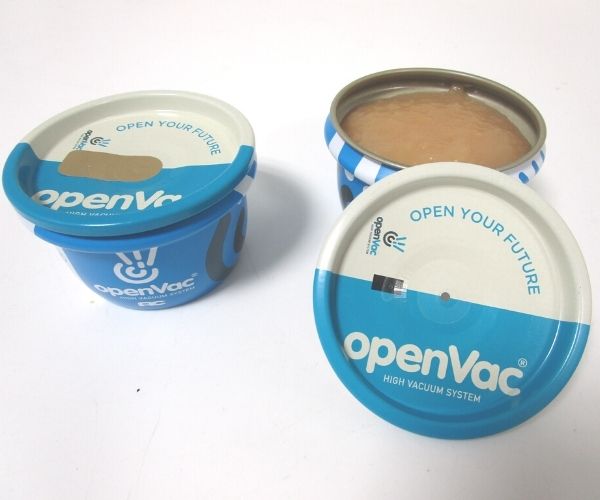
The CTCPA has been conducting tests since March 2022 on a new packaging technology that allows the implementation of deep vacuum closing of specific cans and jars according to the OPEN VAC® technology of the Auxiliar Conservera SA Group, partner of the Technical Center.
What are the benefits of this technology?
- No crimping
- Preservation of quality (elimination of oxidation)
- Metal and glass compatibility
- New forms of packaging
- Heat treatment without covering liquid
- Reduced carbon impact of transportation
- Microwave and oven compatibility
You are interested in the technology ? The CTCPA carries out 3 complementary and independent R&D steps for you!
- Pre-tests on the interest of the technology for your products: From your recipes, we carry out deep vacuum packaging tests followed by a pasteurization or sterilization process. You leave with demonstration samples of your products. A quick and economical step to test if this technology brings you benefits!
- Improve your products or innovate with technology: Deep vacuum packaging technology opens new perspectives for product improvement or innovation. The CTCPA proposes to accompany you to explore in depth all these possibilities, to improve the experience of your customers or to create new successes! A step to deepen and validate the technical and economical interest !
- Produce pre-series to test your markets without investing: Thanks to our equipment, as well as the deep vacuum packaging system and the packaging developed by Auxiliar Conservera SA, we can produce from a few dozen to a few hundred sterilized or pasteurized samples. A step to test with your customer targets!
You want to know more about it? Contact Nicolas BELAUBRE - technology project manager - nbelaubre@ctcpa.org - +33 6 73 69 56 16
__
The development of food products, processes and packaging is at the heart of our DNA. As a technical center, our mission is to identify, test and advise on innovations in processes, products, ingredients and packaging for an optimal organoleptic, nutritional and health experience for your consumers. Each year, we invest more than 2 million euros in research programs that enrich the skills of the teams we put at your service.