

Packaging
Controlling organic contaminants in packaging: experts and a cutting-edge analytical platform
10
June
Published on : 10/06/2022
" A container-content interaction analysis laboratory is first and foremost a laboratory of expertise "says Philippe Saillard, head of the packaging chemistry unit at the CTCPA. "Beyond the analyst's job, this expertise covers knowledge of regulations and risk assessment, the physicochemistry of packaging materials, the composition and properties of food products, and the processes used by the chemical industry, packaging manufacturers, the food industry and recyclers.
But the CTCPA's experts are also surrounded by the best tools currently available! The DIS30 platform was set up in collaboration with IPC, the plastics processing technical center, and financed by the AURA region. This multi-site platform capitalizes on the expertise and technical resources of the two centers, providing manufacturers and professionals with the tools they need to develop safer, more sustainable packaging.
With regard to the food-friendliness of packaging, three big high-sensitivity equipment dedicated to trace characterization have been acquired by the CTCPA and made available to the platform. These tools enable us to analyze all types of organic compounds present in packaging and likely to migrate into foodstuffs: highly volatile contaminants, apolar contaminants, heavy and/or soluble contaminants in aqueous media. This latest-generation equipment enables us to provide robust analytical methods for both the identification and quantification of contaminants, to meet the regulatory obligations of industry and help ensure consumer safety.
Project funded by the Auvergne-Rhône-Alpes region

But the CTCPA's experts are also surrounded by the best tools currently available! The DIS30 platform was set up in collaboration with IPC, the plastics processing technical center, and financed by the AURA region. This multi-site platform capitalizes on the expertise and technical resources of the two centers, providing manufacturers and professionals with the tools they need to develop safer, more sustainable packaging.
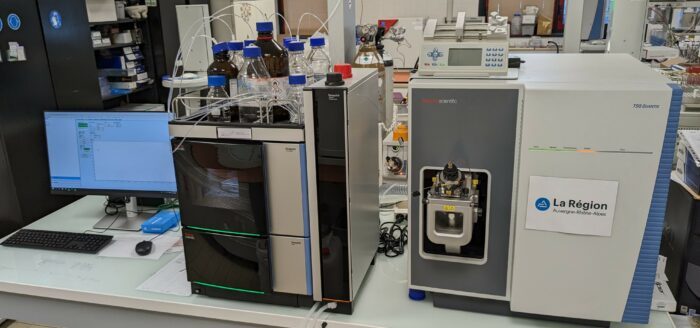
The CTCPA's latest MS² HPLC line, dedicated to testing the alimentarity of plastic packaging, financed by the AURA region as part of the DIS30 platform.
With regard to the food-friendliness of packaging, three big high-sensitivity equipment dedicated to trace characterization have been acquired by the CTCPA and made available to the platform. These tools enable us to analyze all types of organic compounds present in packaging and likely to migrate into foodstuffs: highly volatile contaminants, apolar contaminants, heavy and/or soluble contaminants in aqueous media. This latest-generation equipment enables us to provide robust analytical methods for both the identification and quantification of contaminants, to meet the regulatory obligations of industry and help ensure consumer safety.
Project funded by the Auvergne-Rhône-Alpes region