

Customer testimonials
Innovation: The CTCPA is supporting ATHELETI in developing the process and launching the first production runs of dehydrated, ready-to-use mate cubes!
28
May
Published on: May 28, 2026
The CTCPA is assisting ATHELETI in establishing the production process and launching the first batches of dehydrated, ready-to-use mate cubes. We spoke with Alexis VERMEERSCH, the company’s founder.
“What stands out most to me about this support is the CTCPA’s ability to explore various technical avenues without limiting itself to a single approach, while providing concrete and pragmatic expertise on industrialization challenges.”
Introduce yourself ATHELETI : structure, vision, values, products, etc.
ATHELETI is a startup specializing in mate, founded to make it easier to enjoy while preserving its flavor and natural properties.
The company was officially incorporated on January 15, and sales began following the final days of production at the laboratory on February 23 and 24.
ATHLETI’s vision is rooted in French, organic production, offering a high-quality, natural, and environmentally friendly product. The goal is to provide a healthy alternative to caffeine for consumers who are mindful of their lifestyle and athletic performance, without falling into the category of dietary supplements or artificial products.
This requirement is also reflected in our commitment to eventually work with partners or subcontractors who adhere to high quality standards, most of whom are based in France.
The company's values are rooted in responsible innovation, quality, and customer focus. Particular attention is paid to the traceability of raw materials, the naturalness of the product, and the user experience. The goal is to offer a product that is practical and reliable while meeting high ethical and environmental standards.
How did you come to contact the CTCPA? What were your needs? What were your objectives?
ATHELETI was born out of a simple observation: mate is a drink with many health benefits, but preparing it is a technical and time-consuming process. It requires a specific ritual involving a gourd (container), a bombilla (traditional filtering straw), and a relatively long preparation time.
I’ve been drinking mate for about three years now, and I’ve noticed that my own consumption has been declining, mainly for practical reasons.
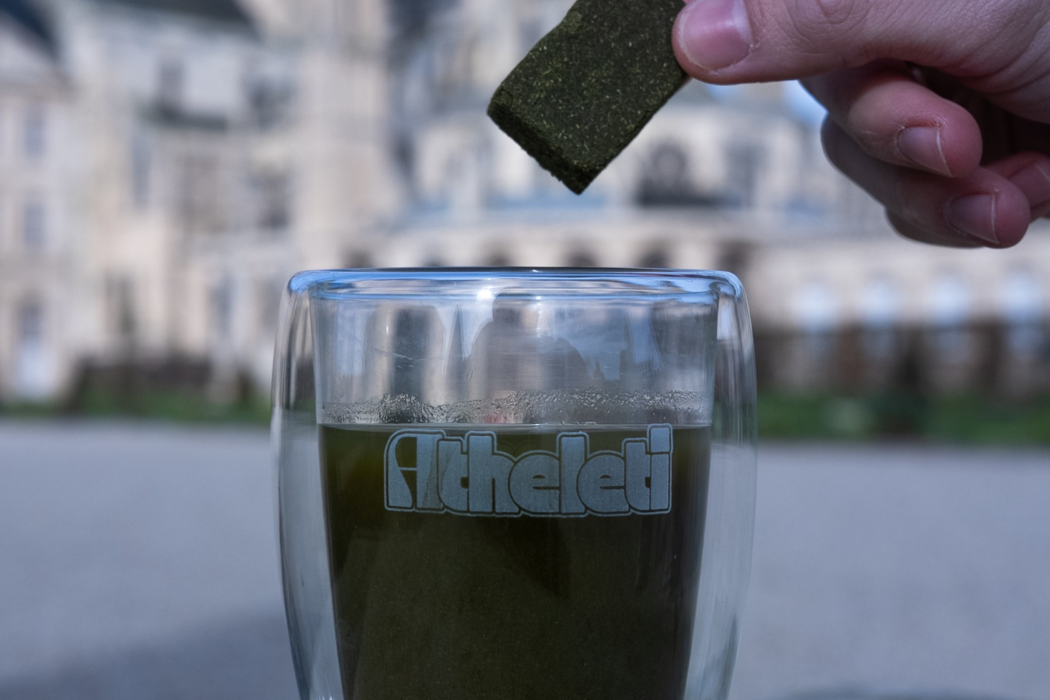
It was this observation that led to the idea of developing a maté tea cube, designed for ease of use: simply drop it into hot water, and it dissolves, producing a ready-to-drink beverage that retains the taste, texture, and properties of maté.
After several experimental trials, the concept of the plant cube emerged as the most suitable solution.
To organize and scale up this project, I teamed up with various partners, including the CTCPA, which provided expertise in food engineering. The R&D sessions in the lab allowed us to refine the recipe, test the processes, and ensure the product’s technical and sensory quality.
My main priority was to establish a solid set of specifications and gain a practical understanding of how to transition from a “homemade” product to industrial-scale production, while maintaining control over costs, production times, and quality.
Why did you choose the CTCPA? How did you hear about the CTCPA?
I discovered the CTCPA quite by chance, through an agricultural news article my mother sent me, which described the laboratory’s activities, particularly those related to the biscuit industry.
Even though it didn’t exactly match my product, I quickly noticed similarities in the processes: a paste-like product that is cooked, dried, and packaged.
What ultimately convinced me to reach out to them—beyond this discovery—was the quality of our initial discussions, as well as their ability to quickly grasp the specific challenges of my product, despite its unconventional nature.
How did the support go?
The support went very smoothly right from the start.
Our initial email exchanges, particularly with Nicolas MARISSAL, FoodLab Manager & Technology Project Manager, were smooth, responsive, and friendly. There was already a genuine understanding of the project and its challenges.
The first in-person meeting took place in October. It provided an opportunity to tour the laboratories, present the project, and clearly define the requirements for the plant-based matrix. The CTCPA quickly recognized the innovative and unique nature of the product, particularly because it is an entirely plant-based matrix, quite different from the more conventional materials typically processed in the laboratory. An adaptation process was then initiated to provide support that was consistent with the project’s technical and budgetary constraints.
Subsequently, a videoconference with David ALLAIN, Director of the Eastern Region – Packaging Division, provided an opportunity to explore certain technical aspects in a very constructive manner.
The research and development sessions, held on February 4 and 11, were a key part of the support process. They provided an opportunity to test various machines, cooking methods, and formulation parameters in order to identify the optimal production conditions and gain a better understanding of the factors involved in scaling up the product.
The two-day format proved to be particularly effective: long enough to make tangible progress on testing and recipes, while remaining compatible with a solo production setup. These sessions are intended to be held regularly in order to continue optimizing the product.
What particularly stands out to me about this support is the CTCPA’s ability to explore various technical avenues without limiting itself to a single approach, while providing concrete and pragmatic expertise on industrialization challenges.
What is your assessment today? How do you see the benefits of this support?
Looking back, I feel very positive about the support I received, especially when it comes to research and development.
What was particularly valuable was having a broad perspective on the possibilities right from the start. The goal wasn’t simply to get the product to work, but to understand how to scale it up efficiently, which machines to use, which parameters to optimize, how to improve the product’s appearance, and how to reduce baking times—all of which have a direct impact on lab rental time and, consequently, on production costs.
What I really appreciated was that the CTCPA never settled on a single approach by saying, “This is how it has to be done.” On the contrary, there was a genuine willingness to test different solutions, different machines, and various work methods in order to identify what was most appropriate and effective for the project.
The plant cube was, however, a rather unusual product for the lab, and they could have opted for a more cautious or standardized approach. But that’s not how it turned out at all. I was supported from start to finish, with the teams showing genuine commitment, adaptability, and a real technical curiosity about the product.
Today, the benefits of this support are very tangible: I have a better grasp of manufacturing processes, a clearer understanding of the challenges of industrialization, and, above all, a much stronger technical foundation for developing the product under the right conditions.
What are your next goals or announcements?
Several goals are taking shape for the next phase of the project, and an important first milestone has already been reached: organic certification.
This is a key priority for the brand, and it was made possible in large part thanks to the work carried out with the CTCPA. The laboratory adheres to a set of standards and procedures that ensure production takes place under conditions that meet the requirements for organic certification. Although the brand has now earned this certification, it wasn’t a foregone conclusion at the outset, so this is a real step forward.
Our next goals now focus primarily on business development and expanding our product line. We are already considering new flavors. The support from the CTCPA has made it much easier for me to plan these future recipes, particularly by helping me better understand formulation constraints, flavor balance, and the impact of ingredients on the product’s composition. Today, this allows me to move forward with greater confidence in developing new products.
In the longer term, the goal is also to build a more sustainable and locally-based organization. The idea is to operate as much as possible within a local supply chain, particularly by relying on solutions based in Normandy for logistics and storage. As the business grows, certain limitations naturally arise in terms of space and order fulfillment, so it becomes important to build a more suitable logistics model, with a sustainable approach and a strong local presence.
Finally, there is also a strong focus on positioning the brand within the world of sports and wellness. With mate-based products and a natural approach to nutrition, the goal is to support the recovery and performance of athletes and sports teams, whether in soccer, padel, or other sports closely tied to lifestyle and wellness. Ultimately, I would really like ATHELETI to become a brand that supports athletes in their daily nutrition in a healthy and natural way.
__
ATHELETI CONTACT:
“What stands out most to me about this support is the CTCPA’s ability to explore various technical avenues without limiting itself to a single approach, while providing concrete and pragmatic expertise on industrialization challenges.”
Introduce yourself ATHELETI : structure, vision, values, products, etc.
ATHELETI is a startup specializing in mate, founded to make it easier to enjoy while preserving its flavor and natural properties.
The company was officially incorporated on January 15, and sales began following the final days of production at the laboratory on February 23 and 24.
ATHLETI’s vision is rooted in French, organic production, offering a high-quality, natural, and environmentally friendly product. The goal is to provide a healthy alternative to caffeine for consumers who are mindful of their lifestyle and athletic performance, without falling into the category of dietary supplements or artificial products.
This requirement is also reflected in our commitment to eventually work with partners or subcontractors who adhere to high quality standards, most of whom are based in France.
The company's values are rooted in responsible innovation, quality, and customer focus. Particular attention is paid to the traceability of raw materials, the naturalness of the product, and the user experience. The goal is to offer a product that is practical and reliable while meeting high ethical and environmental standards.
How did you come to contact the CTCPA? What were your needs? What were your objectives?
ATHELETI was born out of a simple observation: mate is a drink with many health benefits, but preparing it is a technical and time-consuming process. It requires a specific ritual involving a gourd (container), a bombilla (traditional filtering straw), and a relatively long preparation time.
I’ve been drinking mate for about three years now, and I’ve noticed that my own consumption has been declining, mainly for practical reasons.
It was this observation that led to the idea of developing a maté tea cube, designed for ease of use: simply drop it into hot water, and it dissolves, producing a ready-to-drink beverage that retains the taste, texture, and properties of maté.
After several experimental trials, the concept of the plant cube emerged as the most suitable solution.
To organize and scale up this project, I teamed up with various partners, including the CTCPA, which provided expertise in food engineering. The R&D sessions in the lab allowed us to refine the recipe, test the processes, and ensure the product’s technical and sensory quality.
My main priority was to establish a solid set of specifications and gain a practical understanding of how to transition from a “homemade” product to industrial-scale production, while maintaining control over costs, production times, and quality.
Why did you choose the CTCPA? How did you hear about the CTCPA?
I discovered the CTCPA quite by chance, through an agricultural news article my mother sent me, which described the laboratory’s activities, particularly those related to the biscuit industry.
Even though it didn’t exactly match my product, I quickly noticed similarities in the processes: a paste-like product that is cooked, dried, and packaged.
What ultimately convinced me to reach out to them—beyond this discovery—was the quality of our initial discussions, as well as their ability to quickly grasp the specific challenges of my product, despite its unconventional nature.
How did the support go?
The support went very smoothly right from the start.
Our initial email exchanges, particularly with Nicolas MARISSAL, FoodLab Manager & Technology Project Manager, were smooth, responsive, and friendly. There was already a genuine understanding of the project and its challenges.
The first in-person meeting took place in October. It provided an opportunity to tour the laboratories, present the project, and clearly define the requirements for the plant-based matrix. The CTCPA quickly recognized the innovative and unique nature of the product, particularly because it is an entirely plant-based matrix, quite different from the more conventional materials typically processed in the laboratory. An adaptation process was then initiated to provide support that was consistent with the project’s technical and budgetary constraints.
Subsequently, a videoconference with David ALLAIN, Director of the Eastern Region – Packaging Division, provided an opportunity to explore certain technical aspects in a very constructive manner.
The research and development sessions, held on February 4 and 11, were a key part of the support process. They provided an opportunity to test various machines, cooking methods, and formulation parameters in order to identify the optimal production conditions and gain a better understanding of the factors involved in scaling up the product.
The two-day format proved to be particularly effective: long enough to make tangible progress on testing and recipes, while remaining compatible with a solo production setup. These sessions are intended to be held regularly in order to continue optimizing the product.
What particularly stands out to me about this support is the CTCPA’s ability to explore various technical avenues without limiting itself to a single approach, while providing concrete and pragmatic expertise on industrialization challenges.
What is your assessment today? How do you see the benefits of this support?
Looking back, I feel very positive about the support I received, especially when it comes to research and development.
What was particularly valuable was having a broad perspective on the possibilities right from the start. The goal wasn’t simply to get the product to work, but to understand how to scale it up efficiently, which machines to use, which parameters to optimize, how to improve the product’s appearance, and how to reduce baking times—all of which have a direct impact on lab rental time and, consequently, on production costs.
What I really appreciated was that the CTCPA never settled on a single approach by saying, “This is how it has to be done.” On the contrary, there was a genuine willingness to test different solutions, different machines, and various work methods in order to identify what was most appropriate and effective for the project.
The plant cube was, however, a rather unusual product for the lab, and they could have opted for a more cautious or standardized approach. But that’s not how it turned out at all. I was supported from start to finish, with the teams showing genuine commitment, adaptability, and a real technical curiosity about the product.
Today, the benefits of this support are very tangible: I have a better grasp of manufacturing processes, a clearer understanding of the challenges of industrialization, and, above all, a much stronger technical foundation for developing the product under the right conditions.
What are your next goals or announcements?
Several goals are taking shape for the next phase of the project, and an important first milestone has already been reached: organic certification.
This is a key priority for the brand, and it was made possible in large part thanks to the work carried out with the CTCPA. The laboratory adheres to a set of standards and procedures that ensure production takes place under conditions that meet the requirements for organic certification. Although the brand has now earned this certification, it wasn’t a foregone conclusion at the outset, so this is a real step forward.
Our next goals now focus primarily on business development and expanding our product line. We are already considering new flavors. The support from the CTCPA has made it much easier for me to plan these future recipes, particularly by helping me better understand formulation constraints, flavor balance, and the impact of ingredients on the product’s composition. Today, this allows me to move forward with greater confidence in developing new products.
In the longer term, the goal is also to build a more sustainable and locally-based organization. The idea is to operate as much as possible within a local supply chain, particularly by relying on solutions based in Normandy for logistics and storage. As the business grows, certain limitations naturally arise in terms of space and order fulfillment, so it becomes important to build a more suitable logistics model, with a sustainable approach and a strong local presence.
Finally, there is also a strong focus on positioning the brand within the world of sports and wellness. With mate-based products and a natural approach to nutrition, the goal is to support the recovery and performance of athletes and sports teams, whether in soccer, padel, or other sports closely tied to lifestyle and wellness. Ultimately, I would really like ATHELETI to become a brand that supports athletes in their daily nutrition in a healthy and natural way.
__