


Life of the CTCPA
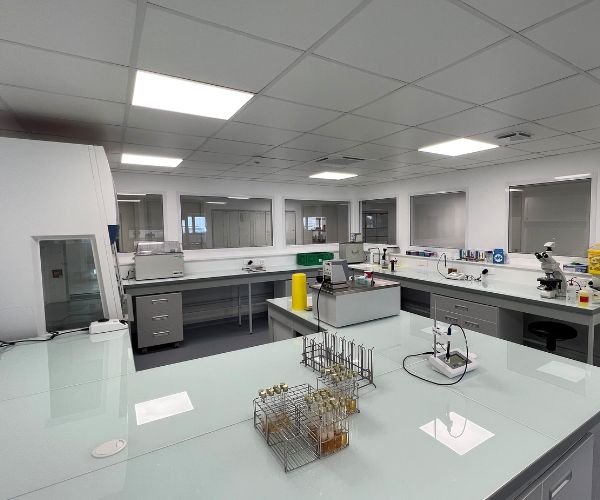
Inauguration of the CTCPA's new microbiology, molecular biology and nutritional quality laboratories
05
June
Published on: 05/06/2023
On March 30, 2023, the Centre Technique de la Conservation des Produits Agricoles (CTCPA) inaugurated its new microbiology, molecular biology and nutritional quality laboratories in Avignon, doubling its analytical surface area from 175m² to 350m².
Historically an expert in spore microbiology applied to appertized products, the CTCPA has diversified over the years, and today offers its expertise in the whole spectrum of food microbiology: crimp examinations, appraisals of non-stable products, research and enumeration of psychotrophic, mesophilic and thermophilic spore-forming bacteria, enumeration of spoilage flora.
Our support for all agri-food businesses
Thanks to its national presence and the synergy between its different sites, the CTCPA can provide a wide range of services beyond the analytical aspect, such as microbiological diagnostics on production lines, product development and theoretical or practical training in microbiology.
The Nutritional Quality Laboratory's activities focus on the nutritional and physicochemical characterization of products, custom analytical development, process impact studies and optimization, nutritional labeling and the INCO-Nutriscore regulation n°1169/2011.
A team of 5 project managers (2 PhDs, 3 engineers) and 5 technicians in microbiology or biochemistry will advise and support you in carrying out these various services.
Challenge tests at the CTCPA: recognized expertise
The CTCPA offers process and product challenge tests on a wide range of microbial species, tailored to the needs of industry. As a specialist in personalized support, the CTCPA is able to adapt to any type of project and propose customized protocols.
In particular, the microbiology laboratory is recognized by the DGAL for carrying out challenge tests with Listeria monocytogenes (NS 28/11/2013).
Collective research at the service of food manufacturers
The laboratories' other role is to participate in collective research projects for agri-food manufacturers, in partnership with research centers, academic laboratories and other technical centers. The results of these studies are promoted through scientific publications, popular science articles and participation in national and international conferences.
Transferring skills to students
The laboratories also play an active role with students, transferring their skills and know-how through the training of the younger generation of laboratory technicians, assistant project managers, assistant engineers, engineers and researchers, by welcoming interns at various levels (BTS, BUT, Master 1 & 2, etc.), work-study students from academic, engineering and private schools, as well as PhD students under Cifre-ANRT research contracts or in cotutelle with other public or private establishments.
To contact the laboratory : microbiologie.contact@ctcpa.org
Find out more about the laboratory : Food microbiology laboratory at every stage of your project (ctcpa.org)