

Customer testimonials
Confectionery: The CTCPA supported Les Tomettes de Marseille in developing their Marseille specialty
12
Nov
Published on: November 12, 2026
The CTCPA supported Les Tomettes de Marseille in the development of their new confectionery line, from assessing its shelf life to optimizing the product. We spoke with Damien FLUCHAIRE, the founder.
“Throughout the support process, we particularly appreciated the teams’ responsiveness, the quality of our interactions, and their ability to provide guidance while allowing room for initiative.”
Tell us about LES TOMETTES DE MARSEILLE: its structure, vision, values, products…
The idea was born in 2025, during the charity Christmas market organized each year by Rotary Marseille Méditerranée to raise funds for charitable causes. In previous years, various creations had been offered there, including jars of mini rum babas. This event provided the opportunity to come up with a new gourmet specialty, driven by the desire to offer an original product rooted in Marseille’s identity.
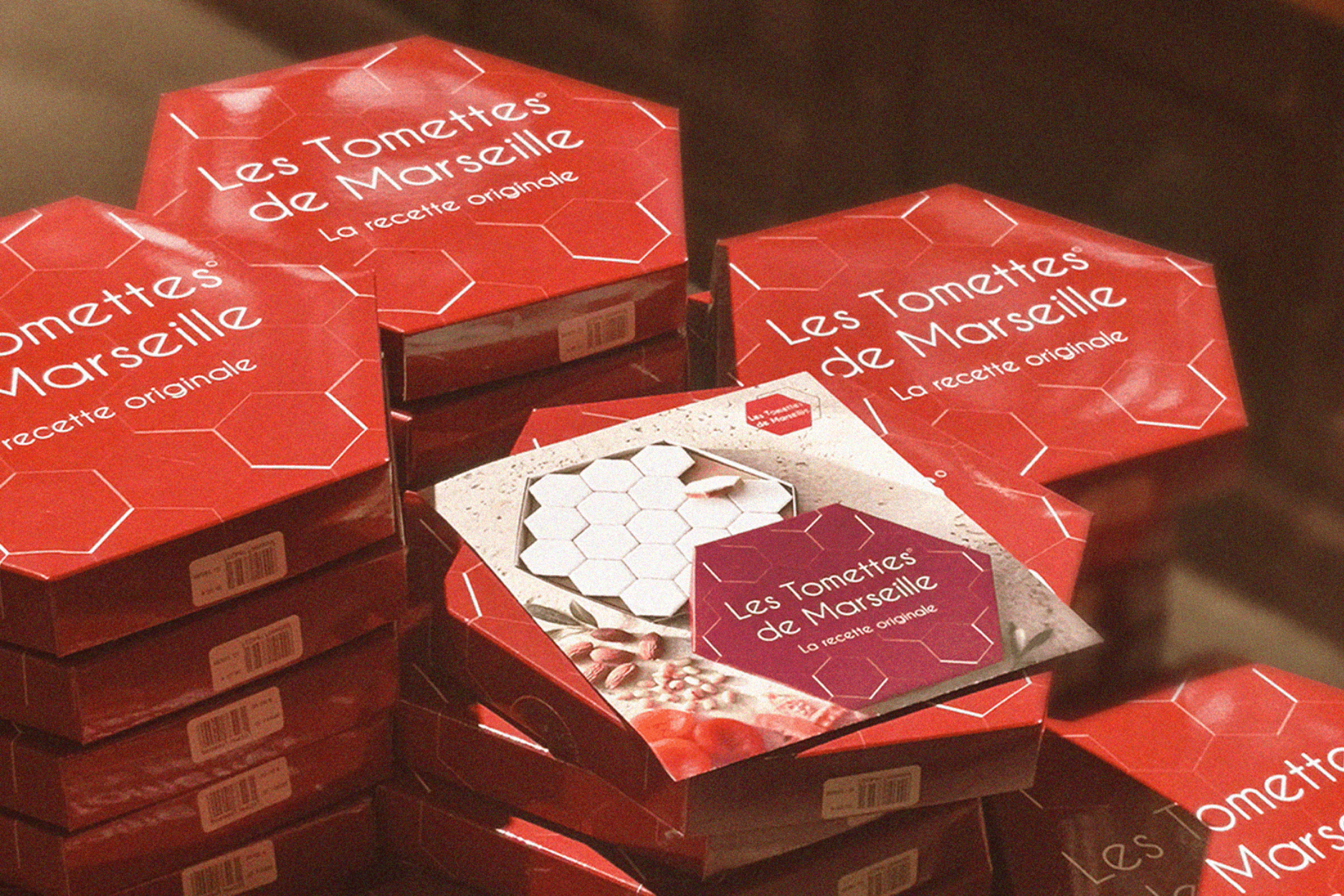
The first recipe was created using ingredients that were available at the time: pine nuts, almond flour, candied orange peel, and apricots. After a few trials, a pastry chef helped refine the recipe. An initial batch of about 100 boxes was prepared for the market; its success inspired them to continue the venture and marked the birth of Les Tomettes de Marseille.
Inspired in part by the calisson, this specialty stands out for its notes of citrus and roasted pine nuts. It also draws on Mediterranean history and identity, with the goal of creating a confection that is emblematic of Marseille.
The goal is to offer a product that the people of Marseille are proud to give as gifts and that visitors enjoy taking home as a memento of their visit to Marseille. Les Tomettes de Marseille are available at Notre-Dame de la Garde and Maison Empereur, among other places. The product has also won over businesses and institutions: the CNRS (National Center for Scientific Research), for example, gives boxes to researchers visiting Marseille, allowing them to take home a little piece of the city.
Production remains artisanal today, carried out alongside other professional activities. The project is gradually expanding, with a commitment to preserving the confectionery’s identity and its roots in Marseille.
How did you come to contact the CTCPA? What were your needs? What were your objectives?
After the success of the initial sales, the desire to take things further naturally arose. The recipe was revised to improve its quality, but certain issues still needed to be addressed, particularly the fact that it dried out over time. It then became essential to organize the project in a professional manner.
Since the recipe was developed in-house, technical support was essential to prepare for its launch. The transition from a one-time sale at a Christmas market to sales through retail stores and to the general public required meeting more stringent requirements, particularly in terms of food safety and regulations.
Several questions arose at that point: How could the recipe and the ingredients used be precisely documented? How could the traceability of raw materials be ensured? What were the regulatory requirements, particularly regarding labeling and allergens? Finally, how could the product’s shelf life be assessed, and how could ways be identified to preserve its quality over time?
The goal was to ensure the safe development of the product, from its formulation to its launch on the market, while preserving the characteristics that define it.
Why did you choose the CTCPA? How did you hear about the CTCPA?
We first learned about the CTCPA during an HACCP training session. The trainer recommended several support organizations and specifically advised us to contact the CTCPA.
From our very first discussions, the organization’s professionalism and the teams’ expertise inspired confidence. The CTCPA emerged as a partner capable of providing an outside perspective, confirming the soundness of our approach and the relevance of the project, and addressing technical and regulatory questions related to its future commercialization.
This expertise provided the technical credibility needed to approach product development with greater confidence.
How did the support go?
The support process began with discussions with the CTCPA teams to present the product, clarify requirements, and define the tasks to be carried out. Several subsequent discussions addressed the various challenges encountered during development, notably with Gilles BERTHEAU, Head of the Grains Division, and Marie-Luce LEBRIQUER, Grains Project Manager.
An initial effort focused on formalizing the product and raw materials: recipes, technical data sheets, ingredient traceability, and sourcing. This step helped structure the process and adopt a more rigorous approach.
The teams also provided support for the project regarding regulatory matters, including labeling, allergens, mandatory information on packaging, and in-store sales requirements. Their feedback helped identify missing elements and clarify the steps needed to meet the applicable requirements.
The technical discussions also focused on manufacturing processes and equipment selection. In particular, the discussions with Gilles BERTHEAU provided an opportunity to explore various mixing solutions tailored to the dough’s texture and manufacturing constraints.
Finally, a key aspect concerned product shelf life. The analyses conducted by the CTCPA laboratories focused on water activity, as well as comparisons with similar products. The results provided a better understanding of the product’s behavior over time and helped identify areas for improvement, particularly regarding the dosage of rosemary—used to limit the oxidation of fats—and changes in texture.
Throughout the entire support process, we particularly appreciated the teams’ availability, the quality of our discussions, and their ability to provide guidance while allowing room for initiative. Their advice, expert insight, and practical feedback helped us refine our tests, better understand the challenges, and move forward with greater confidence in the product’s development.
What is your assessment today? How do you see the benefits of this support?
The CTCPA’s support helped turn an idea into a concrete, fully developed product. It also served as a real catalyst: the teams’ expertise enabled us to make faster progress and produce a higher-quality product than we would have been able to achieve on our own.
Beyond the product itself, this support helped professionalize the process, provided a better understanding of the requirements for bringing the product to market—particularly regarding regulatory and health issues—and allowed us to take a step back and evaluate our work methods. It also strengthened the project’s credibility with business partners.
Today, Tomettes de Marseille are beginning to find their place in the city’s iconic retail locations, with very positive feedback from consumers. The project is still in its early stages, but these initial steps are a testament to the hard work that has gone into it and inspire us to continue developing it.
What are your next goals or announcements?
The goal is to continue gradually expanding Tomettes de Marseille by strengthening its presence in the city’s iconic retail locations and growing sales to businesses.
Several projects are already underway, including the creation of a smaller box size and the development of new recipes. Five recipes are already well underway and will be introduced over time.
In the longer term, if demand continues to grow, production operations may evolve, with the possibility of hiring more staff and increasing output. The challenge is to find the right pace for growing the business while maintaining the product’s quality and identity.
Beyond the confection itself, our goal is to keep the history of the Tomettes de Marseille alive. A delicacy is not defined solely by its taste; it also embodies a story, an identity, and a connection to the region it represents.
__
CONTACT LES TOMETTES DE MARSEILLE:
“Throughout the support process, we particularly appreciated the teams’ responsiveness, the quality of our interactions, and their ability to provide guidance while allowing room for initiative.”
Tell us about LES TOMETTES DE MARSEILLE: its structure, vision, values, products…
The idea was born in 2025, during the charity Christmas market organized each year by Rotary Marseille Méditerranée to raise funds for charitable causes. In previous years, various creations had been offered there, including jars of mini rum babas. This event provided the opportunity to come up with a new gourmet specialty, driven by the desire to offer an original product rooted in Marseille’s identity.
The first recipe was created using ingredients that were available at the time: pine nuts, almond flour, candied orange peel, and apricots. After a few trials, a pastry chef helped refine the recipe. An initial batch of about 100 boxes was prepared for the market; its success inspired them to continue the venture and marked the birth of Les Tomettes de Marseille.
Inspired in part by the calisson, this specialty stands out for its notes of citrus and roasted pine nuts. It also draws on Mediterranean history and identity, with the goal of creating a confection that is emblematic of Marseille.
The goal is to offer a product that the people of Marseille are proud to give as gifts and that visitors enjoy taking home as a memento of their visit to Marseille. Les Tomettes de Marseille are available at Notre-Dame de la Garde and Maison Empereur, among other places. The product has also won over businesses and institutions: the CNRS (National Center for Scientific Research), for example, gives boxes to researchers visiting Marseille, allowing them to take home a little piece of the city.
Production remains artisanal today, carried out alongside other professional activities. The project is gradually expanding, with a commitment to preserving the confectionery’s identity and its roots in Marseille.
How did you come to contact the CTCPA? What were your needs? What were your objectives?
After the success of the initial sales, the desire to take things further naturally arose. The recipe was revised to improve its quality, but certain issues still needed to be addressed, particularly the fact that it dried out over time. It then became essential to organize the project in a professional manner.
Since the recipe was developed in-house, technical support was essential to prepare for its launch. The transition from a one-time sale at a Christmas market to sales through retail stores and to the general public required meeting more stringent requirements, particularly in terms of food safety and regulations.
Several questions arose at that point: How could the recipe and the ingredients used be precisely documented? How could the traceability of raw materials be ensured? What were the regulatory requirements, particularly regarding labeling and allergens? Finally, how could the product’s shelf life be assessed, and how could ways be identified to preserve its quality over time?
The goal was to ensure the safe development of the product, from its formulation to its launch on the market, while preserving the characteristics that define it.
Why did you choose the CTCPA? How did you hear about the CTCPA?
We first learned about the CTCPA during an HACCP training session. The trainer recommended several support organizations and specifically advised us to contact the CTCPA.
From our very first discussions, the organization’s professionalism and the teams’ expertise inspired confidence. The CTCPA emerged as a partner capable of providing an outside perspective, confirming the soundness of our approach and the relevance of the project, and addressing technical and regulatory questions related to its future commercialization.
This expertise provided the technical credibility needed to approach product development with greater confidence.
How did the support go?
The support process began with discussions with the CTCPA teams to present the product, clarify requirements, and define the tasks to be carried out. Several subsequent discussions addressed the various challenges encountered during development, notably with Gilles BERTHEAU, Head of the Grains Division, and Marie-Luce LEBRIQUER, Grains Project Manager.
An initial effort focused on formalizing the product and raw materials: recipes, technical data sheets, ingredient traceability, and sourcing. This step helped structure the process and adopt a more rigorous approach.
The teams also provided support for the project regarding regulatory matters, including labeling, allergens, mandatory information on packaging, and in-store sales requirements. Their feedback helped identify missing elements and clarify the steps needed to meet the applicable requirements.
The technical discussions also focused on manufacturing processes and equipment selection. In particular, the discussions with Gilles BERTHEAU provided an opportunity to explore various mixing solutions tailored to the dough’s texture and manufacturing constraints.
Finally, a key aspect concerned product shelf life. The analyses conducted by the CTCPA laboratories focused on water activity, as well as comparisons with similar products. The results provided a better understanding of the product’s behavior over time and helped identify areas for improvement, particularly regarding the dosage of rosemary—used to limit the oxidation of fats—and changes in texture.
Throughout the entire support process, we particularly appreciated the teams’ availability, the quality of our discussions, and their ability to provide guidance while allowing room for initiative. Their advice, expert insight, and practical feedback helped us refine our tests, better understand the challenges, and move forward with greater confidence in the product’s development.
What is your assessment today? How do you see the benefits of this support?
The CTCPA’s support helped turn an idea into a concrete, fully developed product. It also served as a real catalyst: the teams’ expertise enabled us to make faster progress and produce a higher-quality product than we would have been able to achieve on our own.
Beyond the product itself, this support helped professionalize the process, provided a better understanding of the requirements for bringing the product to market—particularly regarding regulatory and health issues—and allowed us to take a step back and evaluate our work methods. It also strengthened the project’s credibility with business partners.
Today, Tomettes de Marseille are beginning to find their place in the city’s iconic retail locations, with very positive feedback from consumers. The project is still in its early stages, but these initial steps are a testament to the hard work that has gone into it and inspire us to continue developing it.
What are your next goals or announcements?
The goal is to continue gradually expanding Tomettes de Marseille by strengthening its presence in the city’s iconic retail locations and growing sales to businesses.
Several projects are already underway, including the creation of a smaller box size and the development of new recipes. Five recipes are already well underway and will be introduced over time.
In the longer term, if demand continues to grow, production operations may evolve, with the possibility of hiring more staff and increasing output. The challenge is to find the right pace for growing the business while maintaining the product’s quality and identity.
Beyond the confection itself, our goal is to keep the history of the Tomettes de Marseille alive. A delicacy is not defined solely by its taste; it also embodies a story, an identity, and a connection to the region it represents.
__