Product & process innovation

The CTCPA, partner of the Qualiment 4CP project

16

Dec
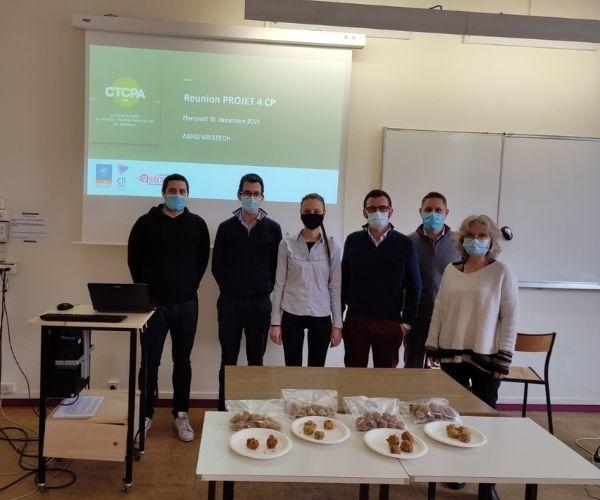
The CTCPA, partner of the Qualiment 4CP project

Published on : 16/12/2021

The Qualiment 4CP project proposes to define the criteria that allow a food rich in plant proteins to be recognized and accepted as a good source of protein by consumers, by combining studies on the physiological component of the recognition of a good source of protein and its modulation by the cognitive component.


The Qualiment 4CP project: the recognition of plant analogues as sources of proteins


There is a consensus on the need to rebalance the different sources of protein in our diet. This requires the substitution of a significant part of meat products by vegetable products. The Qualiment 4CP project aims to better understand the physiological criteria that determine the acceptability of vegetable analogues of meat and to integrate these criteria in the development of alternative vegetable products. The study will measure dietary behaviors and carry-over/compensation effects in subjects consuming foods of varying plant protein content.

The project partners are : UMR INRA-AgroParisTech PNCA / CTCPA / UMR INRA-AgroParisTech MIA / Univ. Birmingham / Univ. Bristol

The CTCPA formulates recipes based on plant proteins


The CTCPA's expertise in the formulation and manufacture of plant protein-based food products is being put to good use in the 4CP project via three stages:

  • The identification and characterization of more than 80 references of vegetable proteins present on the market (internal protocols developed specifically for the project),

  • The formulation of falafel-type products based on cereals and legumes with variable protein contents and optimized amino acid compositions,

  • The manufacturing of products that will be used for consumer tests.


Contact Fabien AUPY - Technology Project Manager - faupy@ctcpa.org

Check our news to stay informed...
Spread the love

latest news

28

Sep

Quality: The CTCPA is assisting ANIFELT in conducting inspections of the “Fruits et Légumes de France” logo!

The CTCPA assisted ANIFELT in conducting document reviews, traceability tests, and on-site audits related to the “Fruits et Légumes de France” logo. We spoke with Victoire CASSIGNOL, Executive Director of ANIFELT.

Read more

The CTCPA assisted ANIFELT in conducting document reviews, traceability tests, and on-site audits related to the “Fruits et Légumes de France” logo. We spoke with Victoire CASSIGNOL, Executive Director of ANIFELT.

18

Sep

CTCPA–PPWR Webinar: Who Is Affected, What Are the Requirements, and What Are the Deadlines?

The PPWR (Packaging and Packaging Waste Regulation) is bringing about significant changes to the rules governing packaging and packaging waste.

Read more

The PPWR (Packaging and Packaging Waste Regulation) is bringing about significant changes to the rules governing packaging and packaging waste.

14

Sep

Webinar – Food Loss and Waste: Let's Take a Closer Look

How can we identify the main sources of losses, quantify them, and, above all, implement measures to reduce them in a sustainable way?

Read more

How can we identify the main sources of losses, quantify them, and, above all, implement measures to reduce them in a sustainable way?

latest news

Customer testimonials

28

Sep

Quality: The CTCPA is assisting ANIFELT in conducting inspections of the “Fruits et Légumes de France” logo!

Published at 12:04

The CTCPA assisted ANIFELT in conducting document reviews, traceability tests, and on-site audits related to the “Fruits et Légumes de France” logo. We spoke with Victoire CASSIGNOL, Executive Director of ANIFELT.

Read more

Packaging

18

Sep

CTCPA–PPWR Webinar: Who Is Affected, What Are the Requirements, and What Are the Deadlines?

Published at 15:03

The PPWR (Packaging and Packaging Waste Regulation) is bringing about significant changes to the rules governing packaging and packaging waste.

Read more

Partners, sectors & events

14

Sep

Webinar – Food Loss and Waste: Let's Take a Closer Look

Posted at 3:53 p.m.

How can we identify the main sources of losses, quantify them, and, above all, implement measures to reduce them in a sustainable way?

Read more

This will close in 0 seconds