

Innovation produits & procédés
Des nouvelles du projet DEMETER : donner une seconde vie aux légumes et leurs coproduits en les transformant en soupes ou jus
23
Mar
Publié le : 23/03/2021
VEGETABLE BY-PRODUCTS AS RESOURCE FOR INNOVATIVE FOOD PRODUCTS AT VERDUYN
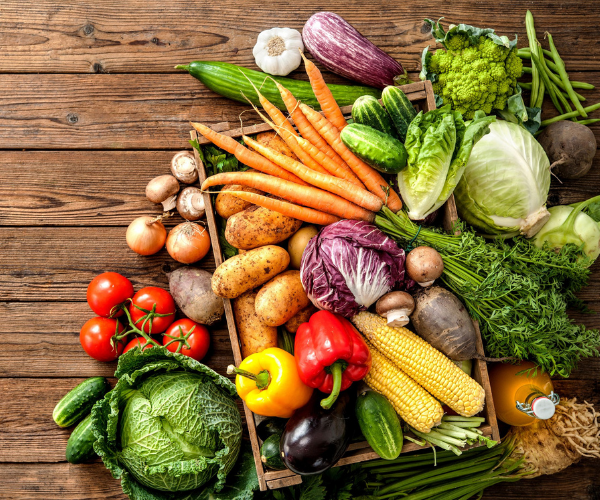
Exploring new possibilities, this is the scope of the DEMETER project, an ERA-NET research project of the FACCE SURPLUS Cofund to valorise second-class vegetables and by-products of the vegetable processing industry. In DEMETER, the focus is on valorisation of carrot, as major vegetable of Verduyn, but also other vegetables like broccoli, cabbage, celeriac and cucumber will be explored. These vegetables and of course their by-products can be used as raw materials for soups and juices and as source of functional ingredients (dietary fiber) obtained by biorefinery from the vegetable pomaces.
Verduyn is a Flemish family business that grows, washes, cuts, packs and sells fresh vegetables, especially carrots. As one of the major carrot specialists in Europe, they know exactly how to handle carrots. But what about all the second-class carrots and pieces that are lost during their processing? In order to counter this issue, Verduyn initiated the DEMETER project, with the support of Flanders’ FOOD, the innovation cluster of the agri-food industry in Flanders, Belgium. INRAE, the National Research Institute for Agriculture, Food and Environment, and CTCPA, a technical centre for food industry, both located in France, were asked to assist Verduyn in their scientific and technical exploration. With this research project, Verduyn aims to obtain more information and data about their business to be ready for the future with innovative food solutions for its customers.
The out-of-spec carrots and carrot pieces are mainly sold as feed, but valorisation as food to obtain a higher value product is clearly the way to go. In this project, valorisation of second-class vegetables as raw material in for instance soups and juices will be tested. Therefore, Verduyn works together with The Juicy Group, a Belgian SME with experience in preparation of fresh juices.
The nutritional parameters and shelf life are analysed by research partner INRAE. By using vegetable by-products as food ingredients, sustainability is an important asset. In the DEMETER project, CTCPA will carry out life cycle assessments (LCA) to investigate the sustainability on a scientific basis, which can be used by Verduyn to substantiate their offer to its customers. Furthermore, the use of second-class vegetables and by-products of vegetables, grown by local farmers, is an important consumer trend and therefore, a point of attention for Verduyn.
Verduyn has a long tradition as family business to work closely together with local farmers via the cooperative company Green Farm, including more than 125 farmers from Belgium, France and the Netherlands. Verduyn is located in Kortemark, close to the French border, and in the centre of the vegetable cultivation and vegetable processing industry in Flanders. The farmers are located close to Verduyn, which has a positive effect on transport costs from field to factory.
Verduyn will use the results of the DEMETER project to orientate its business with scientific data from renowned institutes like INRAE and technical centres like CTCPA. This is the only way forward for a family business to invest more in R&D to become a food processing company of the future, together with the support of Flemish and French funding agencies.
The DEMETER project is funded by the FACCE SURPLUS ERA-NET 3rd call, it has received research funding form Flanders Innovation & Entrepreneurship (VLAIO) and from the French National Research Agency (ANR) and support from Flanders’ FOOD.